
The rapid evolution of mobile network technology has revolutionized how we communicate and interact with the digital world. While 5G currently leads in delivering high-speed connectivity and low latency, 6G is on the horizon, promising to redefine possibilities with groundbreaking innovations.
What is 5G?
Launched globally in 2020, 5G brought significant advancements over its predecessor, 4G. It offers incredible download speeds of up to 20 Gbps, enabling faster mobile internet and seamless streaming. With ultra-low latency as low as 1 millisecond, it supports real-time applications such as autonomous vehicles and remote surgeries. Additionally, 5G can connect up to 1 million devices per square kilometer, facilitating the growth of smart cities and IoT ecosystems.
What is 6G?
Set for deployment around 2030, 6G represents the next leap in mobile network technology. Expected to deliver speeds of up to 1 Tbps, 6G will be 100 times faster than 5G. Its ultra-low latency, approaching zero, will enable instantaneous communication, making it suitable for futuristic technologies like holographic communication and brain-computer interfaces. Furthermore, 6G will support up to 10 million devices per square kilometer, paving the way for hyper-connected environments.
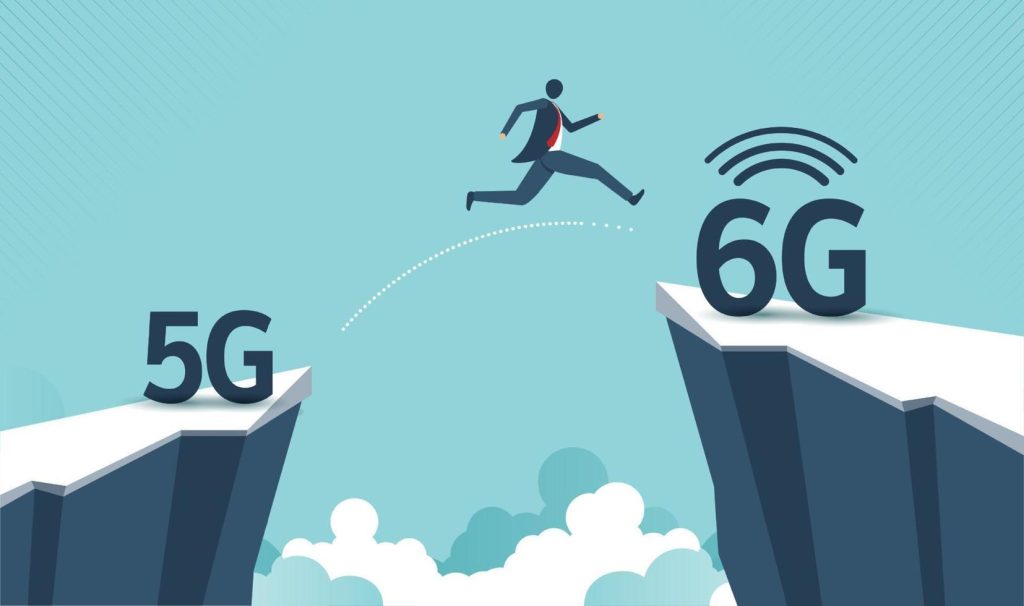
Comparing 5G and 6G
For instance, downloading a 4K movie on 5G takes about 10 seconds, whereas 6G will achieve this in less than a second.
Connectivity and Innovation
Both 5G and 6G focus on enhancing connectivity. 5G has enabled the development of smart cities, connecting traffic systems, public infrastructure, and devices seamlessly. On the other hand, 6G is expected to build on this foundation, integrating advanced IoT systems and supporting revolutionary applications like real-time holographic meetings and satellite-powered global internet coverage.
Applications of 5G and 6G
5G Applications:
- High-speed streaming and downloads.
- Reliable connectivity for autonomous vehicles.
- Remote healthcare, including telesurgery.
- Low-latency online gaming.
6G Applications:
- Real-time holographic communication for virtual meetings.
- Brain-computer interfaces that allow device control via thoughts.
- AI systems that adapt to user behavior.
- Satellite-based global internet access.
Challenges for 5G and 6G
Challenges of 5G
The widespread deployment of 5G faces hurdles like high infrastructure costs, compatibility issues with older devices, and concerns about radiation exposure.
Anticipated Challenges for 6G
The transition to 6G will require even more investment in infrastructure. Additionally, the energy demands of 6G could raise environmental concerns, while the vast interconnectivity will necessitate advanced security measures to prevent cyber threats.
The Future of Connectivity
The shift from 5G to 6G is more than a technological upgrade—it is a fundamental transformation of how we live and work in a digital age. While 5G continues to revolutionize industries like healthcare, transportation, and entertainment, 6G will unlock new possibilities, making real-time holograms, thought-controlled devices, and global internet coverage a reality.
As the world moves toward 6G, these advancements will reshape the digital landscape, creating a hyper-connected world that brings us closer to realizing the full potential of modern technology.
Space tourism is revolutionizing access to outer space, transforming it from a privilege of the elite to an exciting opportunity for all. Technological advancements and innovative companies are making this dream a reality.